
Upcoming Events

Location - MANGALORE

July 6, 2026 at 4:29 PM

Bharat SLRCC Wild House

1. Bharat SLRCC Wild House – Nature & Life Campus Section Title Bharat SLRCC Wild House – Nature & Life Campus About Bharat SLRCC Wild House is a nature and life conservation campus. It is a space where people, cattle, plants, birds and small creatures are encouraged to live and interact in their natural way, creating an environment that is free, simple and close to nature. The word “Wild House” represents a house of life that is not trapped inside rigid social boxes, but lives in harmony with land, soil, water and all living beings. This campus is dedicated to land resource conservation, organic farming, cow‑based inputs, nurseries, training programmes and the development of nature‑friendly habitats. It is designed as a living example of how human life can reconnect with the land and with the wider community of life, instead of being separated from it. Bharat SLRCC Wild House is not a zoo or a wildlife rescue centre. It does not keep or display wild animals for entertainment or commercial purposes, and it does not carry out wildlife rescue operations. It is a campus focused on land, nature and rural life restoration, using peaceful and constructive activities. Vision To guide human life towards a more natural, free and wild‑touch way of living, in deep respect for land, soil and water. To demonstrate a model where humans, animals, plants and small creatures can share one “house” – one campus – in harmony, each in their own natural role. To create a practical and visible example of land resource conservation combined with daily life, so that visitors can experience this model and carry it back to their own villages and communities. Main Activities Developing and maintaining organic and nature‑friendly farming models on the campus, using local resources and traditional knowledge. Operating a goshala and preparing cow‑based organic inputs like compost and other formulations to support soil regeneration and chemical‑free agriculture. Running nurseries that prepare saplings and plants needed for the “Save 1 Earth” movement and other land restoration efforts. Organising training programmes, workshops and exposure visits for youth, farmers, students, panchayat members and community leaders on topics such as land resource conservation, organic farming, rural livelihoods and nature‑connected living. Providing simple stay and food facilities for visitors and movement members, so that they can spend time in the campus, observe the activities and experience a wild‑touch, nature‑centric lifestyle. 2. Bharat SLRCC Goshala – Land & Life Restoration Centre Section Title Bharat SLRCC Goshala – Land & Life Restoration Centre About Bharat SLRCC Goshala is a centre for land and life restoration. It focuses on the care and conservation of indigenous cows and on using their dung, urine and other natural by‑products to regenerate soil, support organic agriculture and strengthen rural livelihoods. The goshala is not only a shelter for cattle; it is a core part of the land resource healing work of Bharat SLRCC. The primary purpose of the goshala is: To honour and protect indigenous cows as an essential part of rural and ecological life. To use cow dung, cow urine and related materials to improve soil health and fertility. To produce and promote natural inputs for organic and eco‑friendly farming, and to connect these inputs directly to field practice. Vision To make cow conservation directly meaningful for land, water, farmers and rural communities, by linking cow‑based practices to visible improvements in soil and agriculture. To transform the goshala from a simple cattle shelter into a Land Resource Healing Centre, where the relationship between cows, land and people is consciously restored and strengthened. Main Activities Providing care, shelter, food and basic health support for indigenous cows in a respectful and humane manner. Preparing natural inputs such as cow dung compost, cow urine‑based formulations and other traditional preparations used in organic farming and soil regeneration. Applying these inputs in the campus fields and in surrounding areas, establishing organic plots, demonstration fields and soil health projects that show the impact on land and crops. Conducting hands‑on training for farmers, youth and interested groups on “goshala‑based land restoration”, including preparation and use of cow‑based inputs and their integration into farming systems. Linking the work of the goshala with wider initiatives like the “Save 1 Earth” movement and “Raja Vana”, so that soil health, tree planting, grazing and biomass cycles are aligned and reinforce each other.
Location - MANGALORE

July 6, 2026 at 4:27 PM

Save 1 Earth Movement

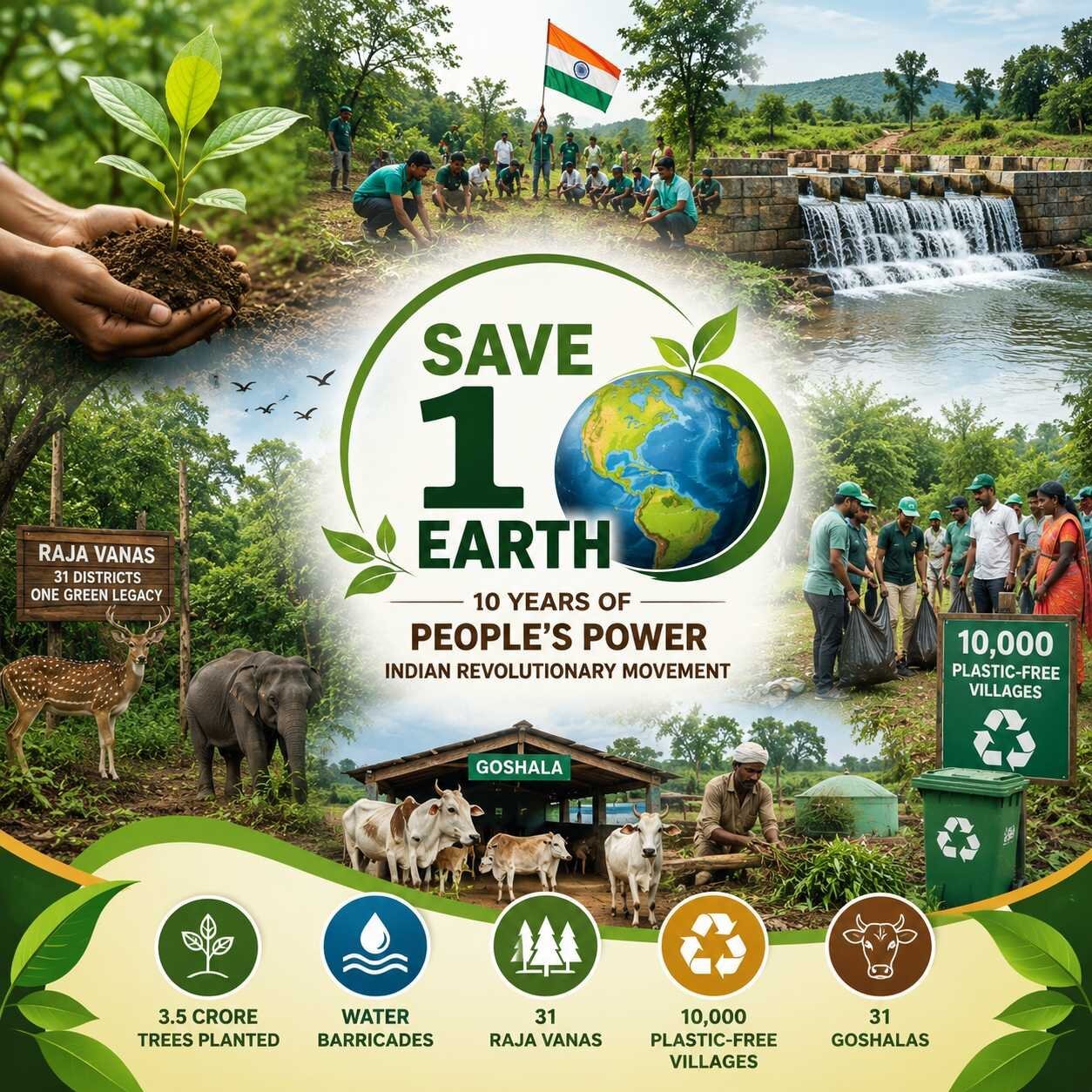
2. Save 1 Earth Movement – Bharat SLRCC’s Mission About Save 1 Earth Movement The Save 1 Earth Movement is the core mission and public movement of Bharat SLRCC (State Land Resource Conservation Committee). It is a comprehensive environmental and social initiative that calls on citizens, communities and institutions to protect all life on Earth and to live within the limits of> The movement recognises that human activities – such as deforestation, pollution, over‑consumption and careless land use – are rapidly damaging our shared home. Save 1 Earth Movement is a call to wake up, unite and act, so that we can secure a healthier environment for current and future generations. Core Objectives Under the Save 1 Earth Movement, Bharat SLRCC works to: Plant and protect trees A major objective is to plant and nurture crores of trees across Karnataka over the coming years, creating green belts, restoring degraded land and increasing tree cover in villages, campuses and cities. Conserve water and protect water bodies The movement promotes protection and revival of lakes, tanks, rivers and groundwater through local action, better land use and community engagement. Reduce pollution and promote eco‑friendly habits Save 1 Earth encourages people to reduce plastic use, manage waste responsibly, follow the principles of Reduce–Reuse–Recycle, and adopt lifestyle changes that lower pollution and greenhouse gas emissions. Support land resource conservation and organic farming Through initiatives like the Bharat SLRCC Goshala Project and Wild House campuses, the movement advances chemical‑free agriculture, soil restoration and sustainable land management. Protect biodiversity and local ecosystems The movement supports the protection of forests, wildlife habitats, grasslands and village ecosystems, recognising that all species – not only humans – have a right to live and thrive. Build awareness and public participation Save 1 Earth organises campaigns, public appeals, educational programmes, university and village‑level events to invite citizens to join the movement, share ideas and take ownership of environmental action. How the Movement Works Save 1 Earth Movement is not just a single project; it is an umbrella under which many projects and actions operate: Bharat SLRCC Wild House – nature and life conservation campus. Bharat SLRCC Goshala Project – district‑wide network of Goshala‑based land and life restoration centres. Raja Vana and tree‑plantation initiatives – creating and protecting green belts, forests and bio‑parks. University and campus programmes – such as activities in Bengaluru University bio parks and other institutions. Village‑level and ward‑level actions – cleaning, planting, land and water care, community awareness. The movement works through: policy‑oriented advocacy and dialogue with government and institutions field‑level action and pilot projects capacity building and training for youth, farmers and communities partnerships with local organisations, universities and public bodies Spirit of Save 1 Earth Movement At its heart, Save 1 Earth Movement carries a simple message: "There is no Planet B. There is> It invites every person – regardless of background or position – to: make small but consistent changes in daily life support tree planting and land restoration where they live reduce waste and pollution respect animals, plants and all forms of life stand up for policies that protect the environment and future generations Projects like Wild House and the Goshala Project turn this message into visible reality on the ground, showing that another way of living – simpler, greener and more responsible – is possible.

Location - MANGALORE

September 3, 2026 at 3:00 PM

Bharat SLRCC Goshala Project

1. Bharat SLRCC Goshala Project – Land & Life Restoration Network

About Bharat SLRCC Goshala Project

The Bharat SLRCC Goshala Project is a India-wide initiative under the Save 1 Earth Movement, led by the State Land Resource Conservation Committee (Bharat SLRCC). It aims to establish and strengthen modern, nature‑linked goshala centres across all districts of the state. These gaushalas are designed not>

India today faces a dual crisis: stray cows and degraded farmland. Large numbers of indigenous cows are abandoned or left wandering, while farms suffer from poor soil, chemical dependence and falling fertility. The Bharat SLRCC Goshala Project turns this crisis into an opportunity – by rescuing cows, stabilising them in caring gaushalas, and using their dung, urine and presence to rebuild the land.

Vision

  • To protect and honour indigenous cows as a central part of India’s ecological and rural life.
  • To use cow‑based practices (dung, urine, grazing, movement) to restore soil, recharge groundwater and support chemical‑free farming.
  • To create a district‑level network of Goshala‑based Land Resource Healing Centres that demonstrate how cow protection and land conservation can work together.
  • To strengthen rural livelihoods by linking gaushalas with farmers, self‑help groups, youth and local communities.

Key Elements of the Project

  • Rescue and care of indigenous cows
    Bharat SLRCC gaushalas rescue and host thousands of desi cows that would otherwise be stray or neglected. Each centre provides shelter, food, basic veterinary support and respectful handling.
  • Dung for fertile soil
    Cow dung is treated as a primary resource for soil regeneration. Through composting and natural preparations, gaushalas supply nearby fields with rich organic matter, rebuilding soil structure and fertility.
  • Urine for bio‑pesticides and plant health
    Cow urine is used to prepare natural bio‑pesticides and growth‑supporting formulations, reducing dependence on chemical pesticides and synthetic inputs.
  • Hooves and movement for groundwater recharge
    The movement of cows, combined with planned grazing and land design, helps improve infiltration, prevent hard crust formation and support groundwater recharge, especially when integrated with soil and water conservation structures.
  • Integration with Save 1 Earth Movement
    Each gaushala works as a local hub under the Save 1 Earth Movement, connecting cows with tree planting, soil restoration, water conservation and village‑level environmental action.

Activities at a Bharat SLRCC Goshala Centre

At the ground level, a typical Bharat SLRCC goshala centre carries out:

  • Daily care and management of indigenous cows – feeding, cleaning, basic health care, shelter maintenance.
  • Preparation of cow dung compost, cow urine‑based formulations and other natural inputs used in organic farming and land restoration.
  • Supply of these inputs to farmers, Wild House campuses and Raja Vana or plantation sites, often through cooperative or community‑based models.
  • Establishment of demonstration plots and fields where farmers can see the impact of cow‑based inputs on soil and crops.
  • Training programmes for farmers, youth and local leaders on topics such as cow‑based agriculture, soil health, water conservation and rural entrepreneurship.
  • Documentation and sharing of successful practices so that the model can be replicated across all districts of India.

Through this integrated approach, the Bharat SLRCC Goshala Project connects Gau Seva (service to cows) with Bhumi Seva (service to land), creating a practical path towards healthier soil, water, farms and villages.